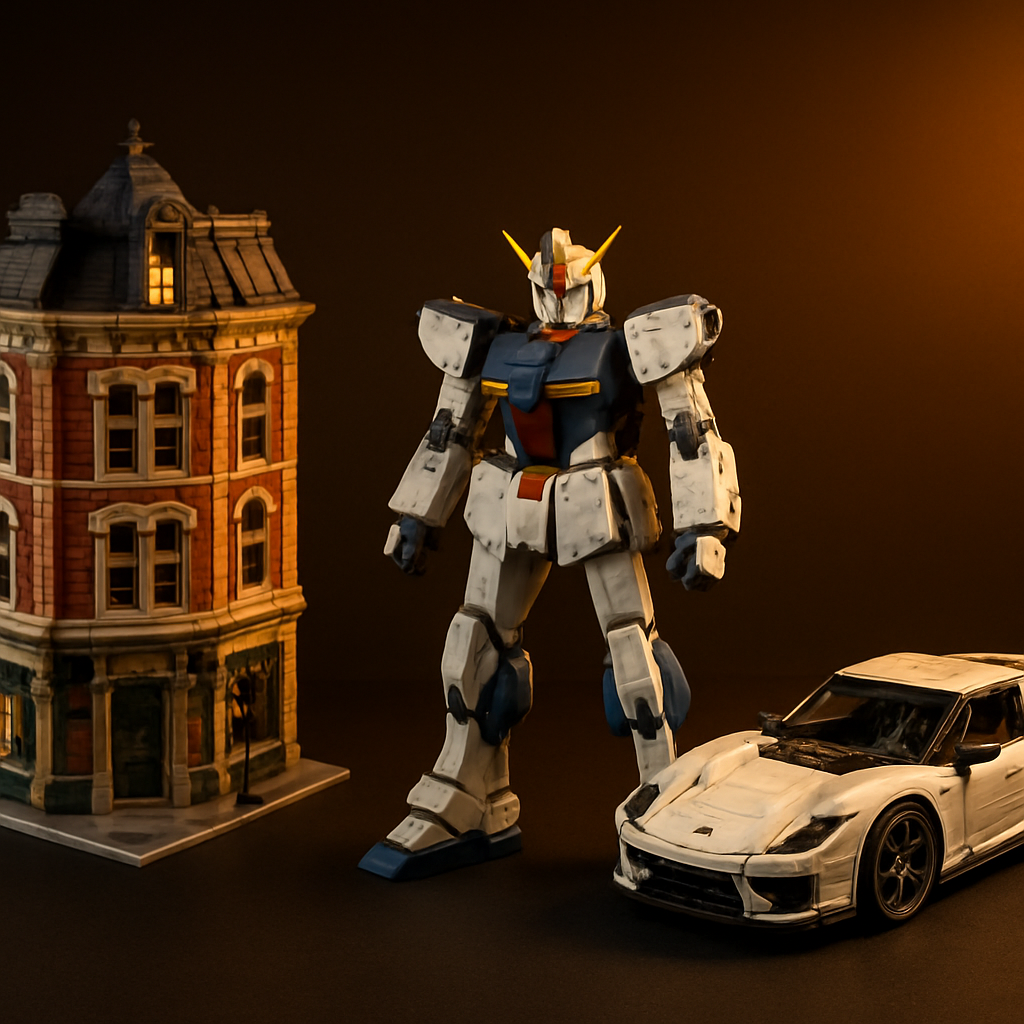
Three categories dominate the high-end brick market: standard stud bricks, Japanese-inspired designs, and technical mechanical models. Each builds differently, displays differently, and teaches different skills. This guide is built for parents of older kids, teen builders, adult hobbyists, and gift buyers across the US and Europe.
The Three Advanced Building Systems, Explained
Before comparing sets, understand the categories. They serve different goals.
Classic stud-and-tube bricks. Universal compatibility, endless part variety. Best for display models, architecture, and large dioramas at scale.
Compact builds, refined color palettes, minimalist proportions. Anime mechs, sushi-stand dioramas, koi ponds, cherry-blossom scenes. Display-first intent.
Gears, axles, pins, pneumatics, motors, and working mechanisms. Drivetrains, steering, suspension, articulated joints. Engineering and STEM value.
Step 1: Identify the Builder
Skill, patience, and goals drive every other choice. Match the system to the person first.
Mid-size standard sets (500–1,200 pieces) or entry-level technical models with basic gears and steering. Keep first technical builds under 800 pieces to avoid frustration.
Full-size technical models, detailed standard architecture, or Japanese-inspired sets. Match the theme to identity. Build time 4–8 hours suits this group.
No ceiling. Thousands of pieces, full mechanical complexity, display-grade detail. Technical for deepest engagement; Japanese-inspired for style in compact form.
Default to a mid-range standard or technical set in the 800–1,500 piece range. Match theme to a known interest and confirm shipping dates before the occasion.
Step 2: Match the System to the Goal
Each system wins at a different job. Pick by outcome.
A lego technic alternative with working gears, steering racks, and pistons teaches mechanical principles directly. For families cutting screen time, technical models hold attention longer than static builds.
Standard sets deliver scale — large architecture and vehicles that command a shelf. Japanese designs deliver character — compact, stylish pieces that group well. Prioritize printed parts over stickers for display.
A japanese lego alternative packs high detail into a small footprint. Ideal for desks, shelves, and apartments where a 60cm supercar will not fit. Shorter assembly, polished result, distinct aesthetic.
Creators care about elements, not finished models. Buy sets rich in useful pieces, or source bulk bricks. Universal compatibility with existing collections matters most here.
Step 3: Read the Specs That Matter
Specs cut through marketing. Focus on these six factors when evaluating any alternative to lego blocks.
More pieces = more build time and value. But count alone misleads — 2,000 tiny technical pins differ from 2,000 standard bricks.
Divide price by piece count. A reputable alternative to lego blocks maker often delivers the same count for noticeably less.
Technical models list scale (1:8, 1:10). Higher detail comes at larger scale. Confirm the finished size fits your space before buying.
Printed vs. stickered detail. Functional vs. cosmetic parts. Printed and functional both signal higher quality and longevity.
Stated estimates help match the set to patience and occasion. Weekend project vs. single-sitting build are very different experiences.
For technical models, check what actually moves — steering, gearbox, suspension, pistons. The feature list defines the experience.
Step 4: Verify Compatibility
Advanced builders mix systems. Compatibility protects your collection. Standard and technical parts both build on the universal stud-and-pin system. Quality makers hold tight tolerances, so bricks clutch firmly and pins seat cleanly.
- Clutch power — Bricks hold without popping apart under normal handling and display conditions.
- Pin fit — Technical pins seat snugly and rotate smoothly where needed, without grinding or binding.
- Tolerance consistency — Parts from the same set feel uniform — no mix of tight and loose that signals inconsistent molding.
If you blend brands, stick with makers known for precise manufacturing. Loose pins ruin technical builds; weak clutch ruins display models. Browse how to evaluate alternative lego brands for a full compatibility checklist.
Step 5: Judge Quality Before You Buy
Specs tell part of the story. Quality signals tell the rest.
- Firm clutch on all bricks
- Smooth-rotating axles
- Consistent color matching
- Clean part edges, no flashing
- Functional parts move without grinding
- Numbered bags for organized build
- Clear step diagrams
- Logical build order
- Confirmed easy by reviews
- Complex technical models especially depend on this
- Free replacement for missing pieces
- Plain shipping cost disclosure
- Fair return terms
- Responsive to support requests
- No surprise fees on delivery
Single reviews mislead. Patterns do not. Look for repeated phrases: "great clutch," "no missing pieces," "pins fit perfectly," "instructions clear." Recurring praise signals consistency. Read how to compare LEGO alternatives like a pro for a structured review-reading method.
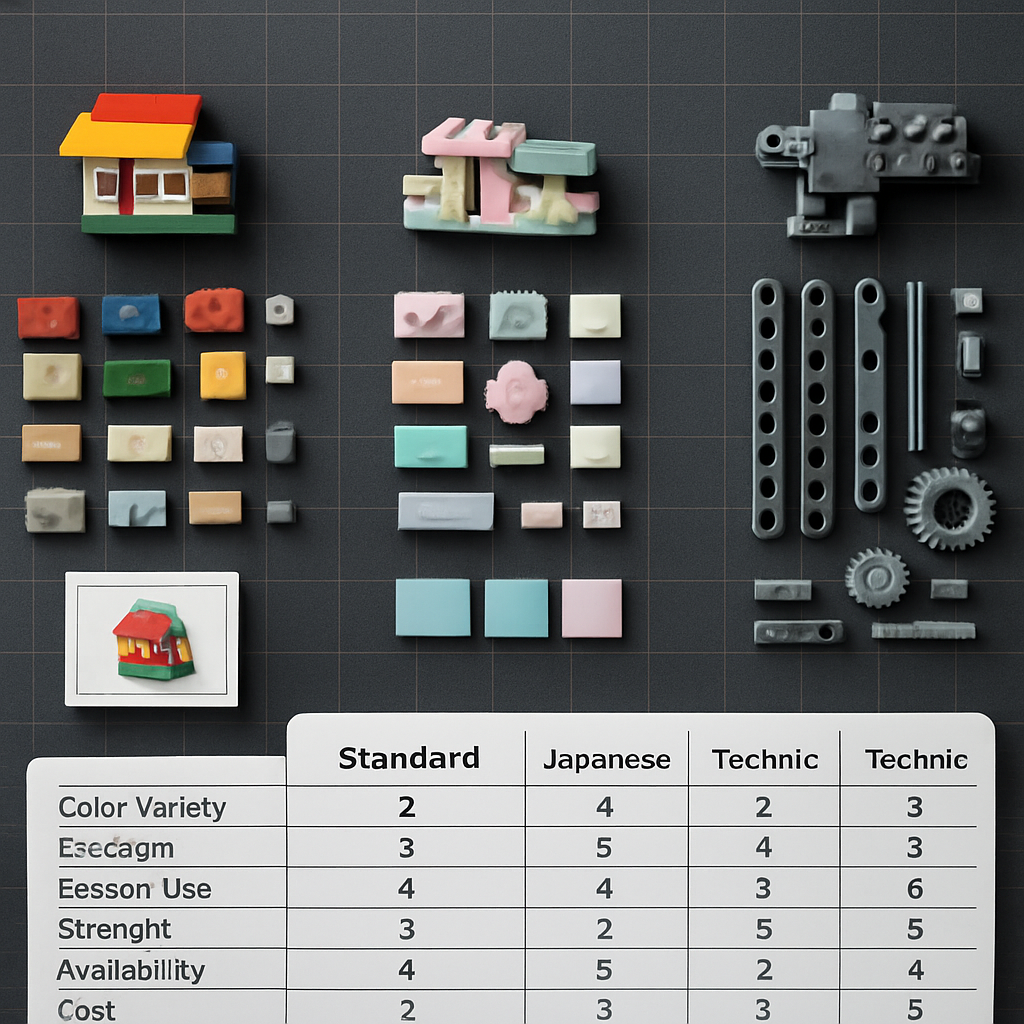
Comparison: Scoring Three Systems Side by Side
Stuck between systems? Score each on the factors that match your goal.
| Factor | Standard | Japanese-Inspired | Technical |
|---|---|---|---|
| Best for | Display, scale, MOC | Style, compact display | Engineering, STEM |
| Typical size | Large | Small to medium | Medium to large |
| Build time | Long | Short to medium | Long |
| Skill demand | Moderate | Low to moderate | High |
| STEM value | Low | Low | High |
| Shelf impact | High (size) | High (style) | High (motion) |
Weight the factors by your goal. A STEM-focused parent scores technical highest. A collector with limited shelf space scores Japanese-inspired highest. A MOC creator scores standard highest. See our guide to alternative lego bricks for any budget for more comparison frameworks.
Practical Buying Tips by Builder Type
- Start one tier easier than the listed age — early wins build confidence and keep kids engaged.
- Choose technical models with basic mechanisms first — gears and steering before pneumatics and motors.
- Keep a parts tray handy to stop small technical pins from going missing mid-build.
- Match theme to passion — a car fan wants a working drivetrain; a design fan wants a Japanese-inspired mech.
- Check that build time fits attention span: 4–8 hours is the sweet spot for most teens.
- Printed parts and a missing-piece policy prevent disappointment mid-build.
- Read the mechanism list and build-time estimate before buying — the feature list defines the experience.
- Confirm scale and finished dimensions fit your display space before committing.
- For deepest engagement, choose technical models with multiple working systems.
- Mid-range standard or technical sets in the 800–1,500 piece range rarely disappoint.
- Confirm age fit, theme interest, and delivery timing before purchasing.
- When the recipient's taste is unknown, a striking display model plays it safe.
Putting It All Together
Three questions decide the system: Who builds? What is the goal? What is the space?
- Engineering goal, STEM focus, teen or adult builder — choose a lego technic alternative with rich working mechanisms.
- Display goal, large shelf, scale lover — choose a standard set.
- Style goal, compact space, design fan — choose a japanese lego alternative.
Then verify the specs, confirm compatibility, and check quality signals before paying. Browse Morebybourn's advanced building sets to compare specs, themes, and support terms across all three systems.
Common Mistakes to Avoid
Count does not equal value. 2,000 technic pins are a different experience from 2,000 standard bricks. Always check part type.
Scale ratio determines shelf footprint. Confirm the finished model fits your display space before buying, especially for 1:8 technical models.
For technical sets, the mechanism list is the product. Steering with no gearbox is a different build from full working drivetrain.
Check build time and piece count too. Some are 90-minute builds; others are full weekend projects. Match to available time.
A missing pin mid-build ruins a technical model. Confirm free replacement policy before buying any advanced set.
Start one tier easier than the age label suggests. Confidence from completion matters more than maximum challenge.
Not sure which system fits your builder?
Browse Morebybourn's full range of technical, standard, and design-led sets — or message us on WhatsApp and we will recommend the right match in under 2 minutes.