How to Rebuild Compatible Brick Sets Into Custom Fandom and Decor Displays
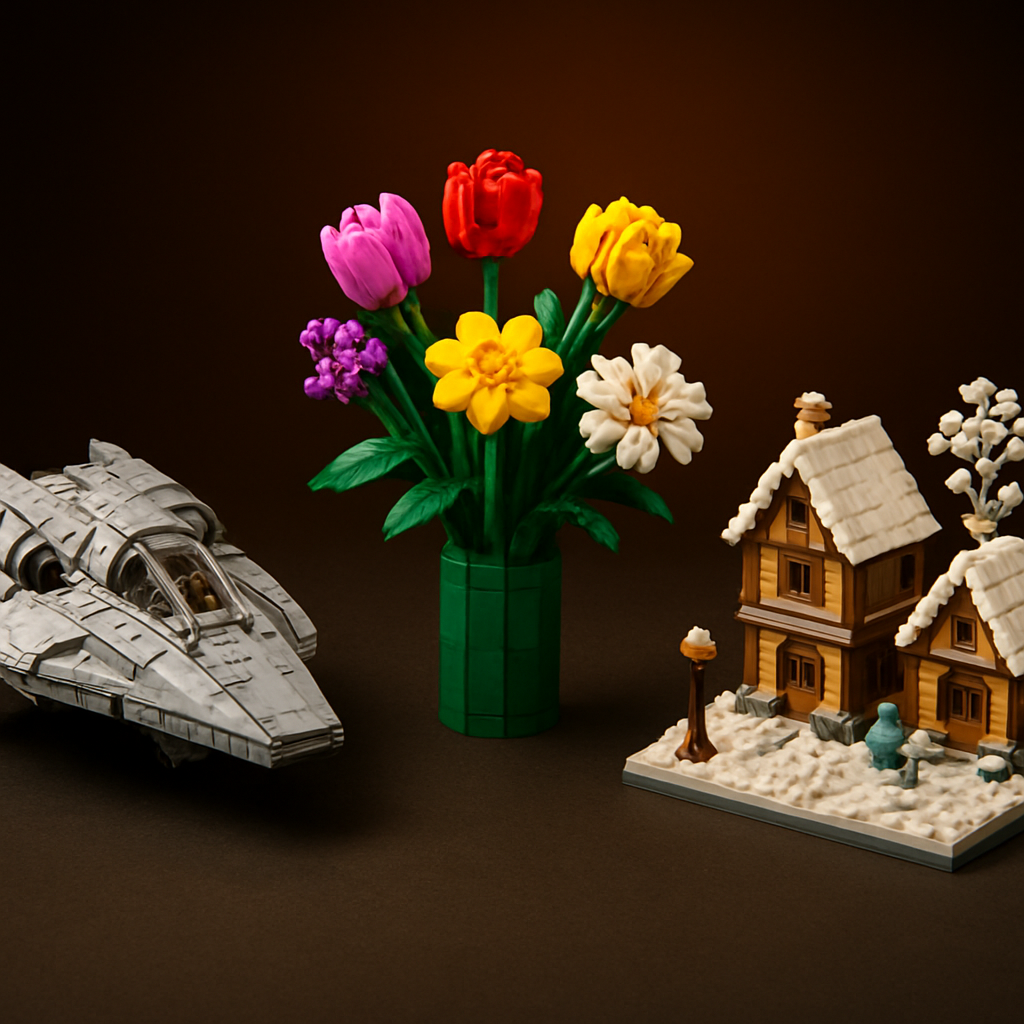
Most brick sets get built once, then sit on a shelf. The smarter move: treat any set as a parts library and rebuild it into something new. A spaceship becomes a starfighter. A botanical kit becomes a custom bouquet. A generic city block becomes a display diorama. This guide covers the full rebuild workflow — pick a donor set, sort the parts, work from visual references, adapt instructions, and balance display quality against stability.
Why Rebuilding Beats Single-Use Building
A rebuild workflow changes the economics of the hobby. One parts collection feeds dozens of projects. No second purchase required. Some of the best lego star wars alternative builds never start from a Star Wars set at all — they start from a generic spaceship or mech kit, rebuilt with the right grays, hinges, and slopes.
One donor set, multiple finished models. No second purchase required.
Your design, not the box art. Every rebuild is unique to you.
Rebuilding teaches structure faster than following instructions alone.
Swap themes seasonally without buying new kits.
Step 1: Choose the Right Donor Set
The donor set is your raw material. Pick wrong, and every later step gets harder. Look past the box image — look at the parts inside.
Enough bricks in one or two core colors. A set with 40 colors and 5 of each is hard to work with.
Slopes, plates, brackets, and hinges open more design options than basic bricks alone.
Higher counts give you more to work with. Check the per-piece value before buying.
A donor close to your target theme saves rework. A gray spaceship rebuilds into a starfighter easily.
For a sci-fi rebuild, choose a set heavy in gray, black, and trans-clear pieces. For a lego flowers alternative build, prioritize a botanical or mixed-color set with stems, small plates, and a wide green and bright-color palette. Decorative bouquets need petals, leaves, and adjustable stems more than structural bricks. Donor selection sets your ceiling — choose for the parts you need, not the picture on the front.
Step 2: Sort Parts Before You Start
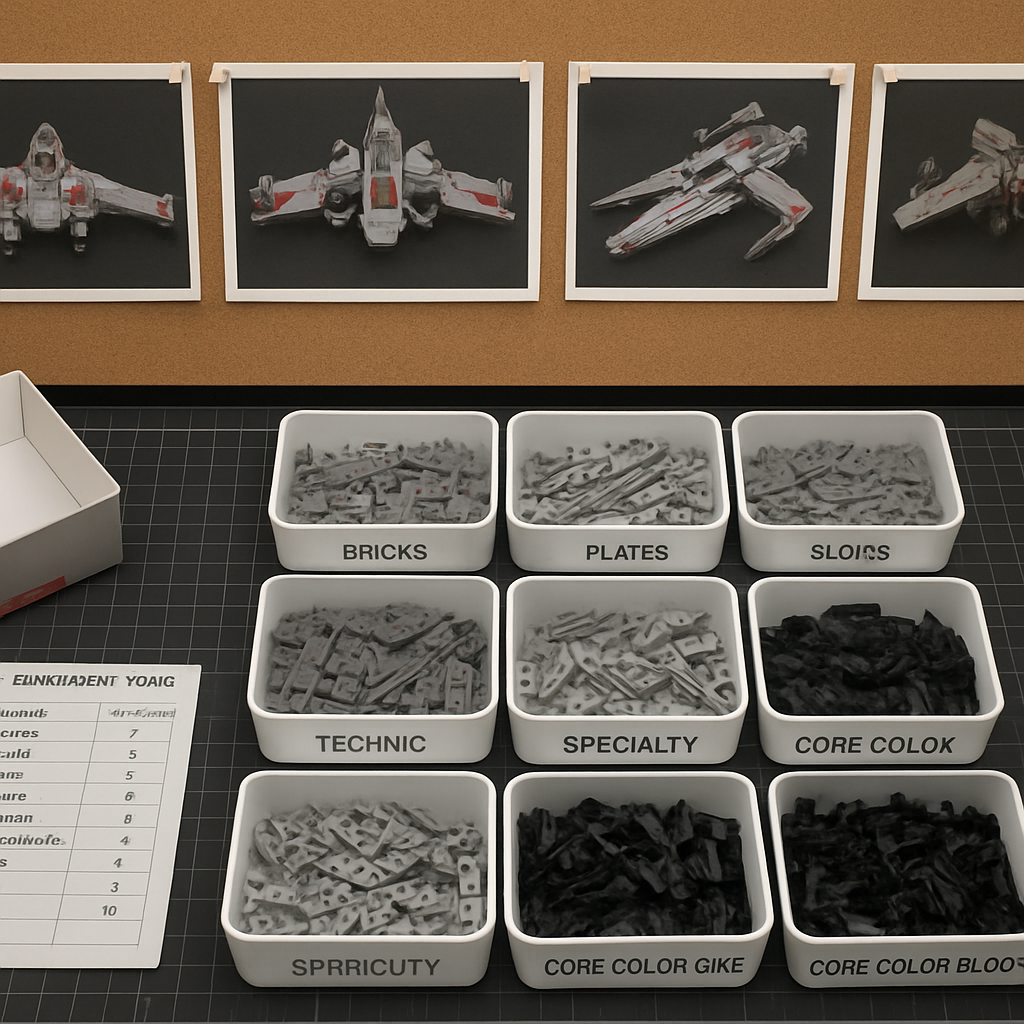
Sorting feels slow. It is the single biggest time-saver in any rebuild. When you can find a 1x2 dark gray slope in two seconds, building speed doubles.
Bricks, plates, tiles, slopes, Technic, specialty.
Group your core build colors separately from fillers.
Within each type, separate large from small pieces.
Count the pieces that define your build. Running out of a critical part mid-build stops everything. A quick count up front tells you whether the design is possible or needs adjusting. Browse the full parts range at Morebybourn to fill gaps before you start.
Step 3: Build From Strong Visual References
You cannot rebuild what you cannot picture. References lock in your target before the first brick connects.
Front, side, top, rear — minimum. They reveal proportions a single image hides.
Close-ups of panels, textures, and color breaks guide surface work.
A reference with a known object helps you size the model correctly.
For botanical work, use real flower photos — real petals guide better color and angle choices than memory.
Define scale first. Pick a scale and commit. Minifig scale for play and most displays. Microscale for compact shelf pieces. Larger scale for statement display models. Mixing scales in one build breaks the visual logic instantly.
Step 4: Adapt Instructions Instead of Inventing From Scratch
Pure freestyle building is hard. Adapting a known structure is faster and more reliable. Community builders publish thousands of custom models with free alternative lego instructions for rebuilding common sets into new models.
Build the base structure, then modify sections. The internal frame often stays; the outer shell changes.
Builders share thousands of custom models with step files and free alternative lego instructions.
Studio by BrickLink lets you plan virtually, test fit, and export your own step-by-step guide.
- 1.Build the donor's core frame for stability.
- 2.Strip the outer panels you want to change.
- 3.Rebuild one face at a time, checking your reference after each.
- 4.Adjust color and texture last, once the shape reads correctly.
Step 5: Build for Both Display and Stability
A display model that sheds parts every time you move it is a failure. Looks and structure are not a trade-off — plan both from the start.
Never stack vertical joints. Overlap like a real brick wall.
A plate across two brick layers ties them together.
Internal cross-supports stop towers from flexing.
Flowers, antennas, and thin spires need a firm base, not a single stud.
Studs Not On Top building hides connection points and creates smooth, finished surfaces. Brackets, headlight bricks, and clips let you build sideways and down. This single technique separates a polished display piece from an obvious toy.
Before you call it done: lift it, tilt it, carry it across the room. Weak points reveal themselves now, while fixes are easy. A display model must survive dusting and shelf moves.
Custom Project Examples
Start with a generic gray spaceship donor. Pull reference images from four angles. Keep the donor's internal spine for strength. Rebuild the hull with angled slopes and greebling — small surface detail that suggests mechanical complexity. Add trans-color elements for engines and cockpit glass. Some of the most convincing lego star wars alternative builds come from exactly this method: a neutral donor, strong references, and patient panel work.
A lego flowers alternative build scales to any budget. Use small plates and slopes for petals, clips and bars for stems, and round plates for blossom centers. Vary stem heights for a natural arrangement. Mix three to five flower types for a realistic bouquet. The finished piece never wilts and makes a strong gift for both adults and kids. Display it in a real or brick-built vase for shelf appeal.
Rebuild a city or modular set into a seasonal scene. Swap color palettes for autumn, winter, or holiday themes. Add brick-built trees, lighting, and small figures. One donor set produces a different display every season — see the full compatible parts range at Morebybourn to source the seasonal colors you need.
Where Alternative-Style Building Wins
| Advantage | Official Brand Only | Alternative + Rebuild |
|---|---|---|
| Cost per build | Higher entry cost per set | Lower part prices, more builds per budget |
| Part availability | Single-brand sourcing limits | Wide compatible ranges fill every gap |
| Creative freedom | Tied to set resale value | Rebuild freely, no preservation pressure |
| Bulk value | Premium priced per piece | Bulk compatible bricks make large displays affordable |
STEM and Family Value of Rebuilding
Rebuilding teaches more than following a booklet. It forces real problem-solving. Kids learn structure by watching a weak design fail and fixing it. They practice planning, measuring, and spatial reasoning. See how LEGO alternative builds for STEM education can extend this further with programmable kits.
Structure learning, problem-solving, spatial reasoning through hands-on failure and iteration.
Replace screen time with collaborative creativity. One parts bin, endless design prompts.
Rebuild challenge prompts sharpen engineering thinking fast — one parts bin, dozens of outputs.
Common Rebuilding Mistakes to Avoid
Hunting for parts kills momentum. Sort first, always.
Building from memory produces vague, off-proportion models.
A pretty model that collapses is wasted work.
Breaks the visual logic of the entire finished piece.
You will need most of them later. Keep them in a tray.
Your Rebuild Checklist
- 1Donor set chosen for color volume and useful part types.
- 2Parts sorted by type, color, and size.
- 3Key parts inventoried and counted.
- 4Reference images gathered from four angles.
- 5Scale chosen and locked.
- 6Starting instructions or base frame identified.
- 7Structure tested before final detailing.
Morebybourn supplies compatible, high-quality bricks and sets built for open-ended rebuilding — consistent fit, broad color ranges, and useful part variety to build anything you imagine.
Frequently Asked Questions
Can I rebuild a compatible set into a model from a different theme?+
Where do I find instructions for custom rebuilds?+
How do I keep a flower or display build from falling apart?+
Is rebuilding suitable for kids and beginners?+
What makes a good donor set for rebuilding?+
Related Articles

8-step guide — compatibility checks, quality checklist, 88009 alternative matching, safety standards, assembly tips, and real value calculation.

6-step guide — parts library setup, Studio by BrickLink planning, SNOT techniques, STEM challenges, LEGO Spike alternative kits, and a 5-mistake checklist.

5-step guide — quality brick selection, free digital designer tools, MOC creativity, value buying, and building for family or display.