How to Choose and Build with LEGO Compatible Sets: A Buyer's Guide
Buying your first non-LEGO brick set raises a fair question: will it match the quality you already own? The answer, for the right brands, is yes. But not every set earns a spot in your collection. This guide walks you through the buyer's journey — how to spot quality, what to check before you pay, and how to fold new sets into the bricks you already love.
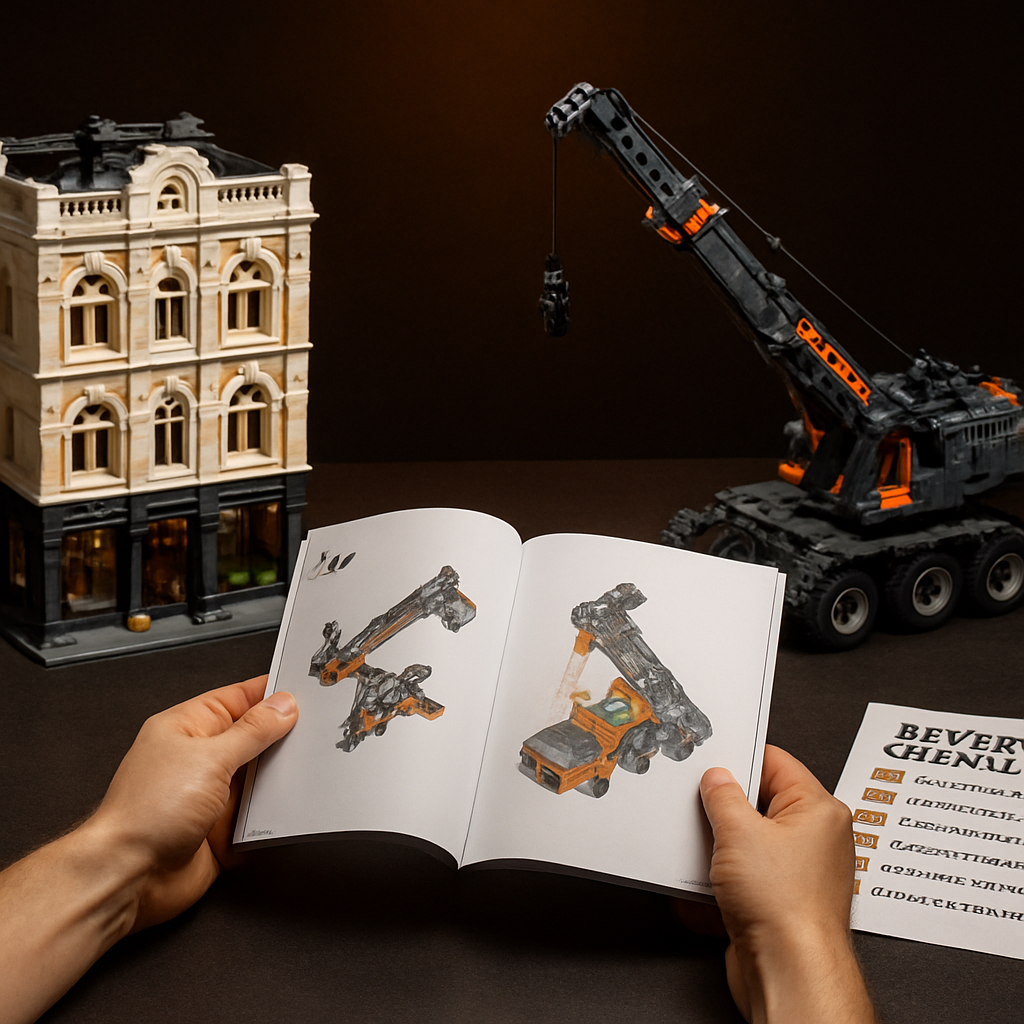
Why LEGO Compatible Sets Have Won Over Adult Builders
Adult hobbyists and parents both face the same problem: official sets cost a lot, and the range you want is not always available. That gap is exactly where quality alternatives stepped in.
Good lego compatible sets now deliver three things that matter to serious builders:
Subject Variety
Themes and models you cannot find on official shelves — motorized cranes, lit architectural builds, military vehicles, anime scenes.
Value Per Piece
More bricks, bigger builds, for the same budget. Premium compatible sets average $0.04–$0.07 per piece versus $0.10–$0.15 for official sets.
Standard Fit
Bricks engineered to the same 8mm stud grid, so they connect seamlessly with every brick you already own.
How to Identify a Quality Set Before You Buy
Not all sets are equal. The difference shows up fast — in fit, finish, and how the finished model holds together. Four checkpoints separate a quality set from a disappointment.
Check the Brick Standard
The single most important spec is stud spacing. Quality brands build to the 8mm center-to-center standard. Look for listings that state compatibility clearly — 'compatible with major brands' signals a maker who knows the spec.
Read the Piece Count Honestly
A 3,000-piece set sounds impressive, but check the finished model size too. A high count with a small footprint means dense detail — often a good sign for display pieces.
Judge the Instructions
Clear step diagrams with one or two new pieces highlighted per step. Color-accurate printing so you can tell dark gray from black. Digital options you can zoom on a tablet for tricky sections.
Scan Reviews for the Right Signals
Look for 'firm' or 'tight' clutch power, color consistency across the set, and notes on whether pieces connected cleanly with existing collections. Reviews mentioning loose bricks or off colors are your early warning system.
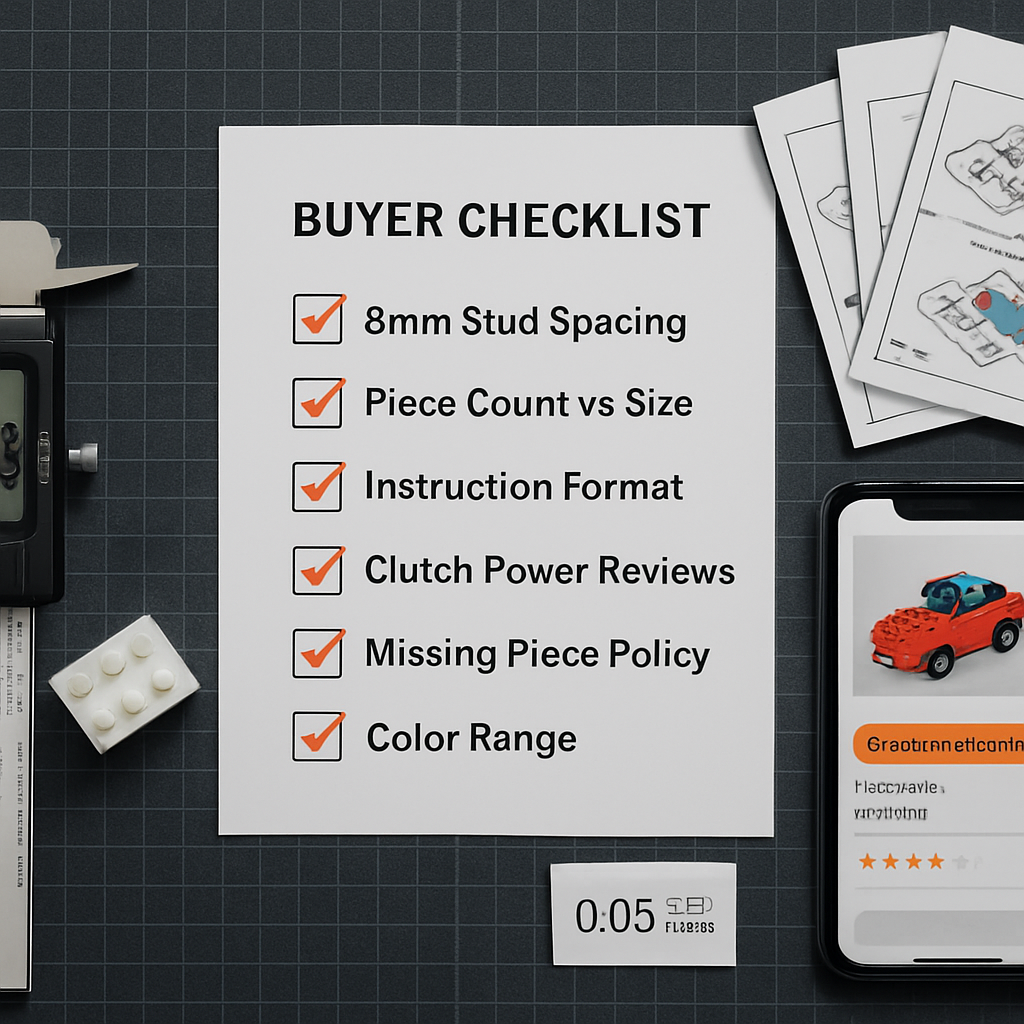
The 6-Point Checklist: What to Check Before You Add to Cart
Run through this list before buying any set. It takes two minutes and saves real money. Strong building blocks lego compatible with the global standard will pass easily.
Does the listing state 8mm stud spacing or clear compatibility?
Is the piece count matched to a sensible finished size?
Are the instructions digital, printed, or both?
Do reviews mention firm clutch power?
Is there a missing-piece policy or guarantee?
Does the color range match what you already own?
Sets that fail this checklist tend to fail in obvious ways — vague specs, no guarantee, thin reviews. Browse the Morebybourn brick collection to find sets that list these details upfront.
How to Match a Set to Your Skill Level and Display Space
A great set is only great if it fits your life. Two factors decide that: difficulty and footprint.
Difficulty: Be Honest About Your Level
Enough challenge to learn technique, not enough to overwhelm.
Step up to modular sections with more complex sub-assemblies.
Chase the big builds for the challenge and the display payoff.
Footprint: Measure Before You Buy
Needs real shelf real estate — measure depth and width before ordering.
Fits comfortably on a desk or 30cm shelf section.
Changes the math entirely — vertical space opens up new options.
How to Integrate New Sets Into Your Existing Collection
This is where alternatives shine. The standard fit means new sets do not sit in isolation — they expand what you can already do. Quality building bricks compatible with lego drop right into existing builds because they share the same grid.
Use One Brand as Your Structural Core
For large mixed builds, pick your most consistent brand for the frame. Build the skeleton from bricks you trust, then layer in variety for detail and color.
Mix for Color and Specialty Pieces
Bring in other brands for colors or parts you cannot get elsewhere — a rare shade, a specialty bracket, a themed element. This is where mixing pays off.
Keep Visible Surfaces Consistent
Slight color differences show most on flat, exposed faces. Use one brand per visible panel. Reserve mixed pieces for internal structure where no one sees them.
Build a Shared Parts Library
Sort your combined collection by color and size, not by brand. Once bricks meet the same standard, the maker stops mattering. A shared bin speeds up every future build.
How to Build Impressive Projects with Compatible Bricks
A quality set is raw material. Great results come from how you build and finish. Here is how to turn a box of bricks into a showcase piece.
Plan in Modules
- —Build the base first — square and solid.
- —Construct walls or vehicle sections as separate modules.
- —Join modules once each is stable.
Customize to Make It Yours
- —Swap colors to match a personal theme or real-world reference.
- —Add nameplates built from bricks — a date, a title, a number.
- —Light the scene with LED brick kits for a display that pops after dark.
Finish for Display
- —Display at eye level, around chest height.
- —Keep models out of direct sunlight to stop color fade.
- —Use a clear acrylic case to block dust and protect detail.
Common Shopping Mistakes and How to Avoid Them
Mistake: Buying on piece count alone
Fix: Check the finished size too. A high count with a small footprint means density, not padding.
Mistake: Ignoring the instructions format
Fix: Confirm digital or printed guides before you buy. Poor instructions ruin even great bricks.
Mistake: Skipping the missing-piece policy
Fix: Choose sellers who guarantee replacement of missing or broken pieces. It's the mark of a maker who stands behind the set.
Mistake: Assuming all colors match across brands
Fix: Buy color-critical pieces from one brand in a single order. Batches vary even within a brand.
Mistake: Starting too big
Fix: Match difficulty to your real skill level. Build up to the giant sets.
A Quick Buyer's Action Plan
Shop Sets Built to the Standard
Every set at Morebybourn lists stud compatibility, piece count, and includes a missing-piece guarantee. Browse the full range and find your next build with confidence.
Final Takeaways
- +Quality comes down to 8mm stud spacing, honest piece counts, clear instructions, and a missing-piece guarantee.
- +The shared standard works in your favor — compatible sets expand your colors, themes, and scales without compromise.
- +Match difficulty to your real skill level. Build in stages.
- +Mix brands smartly: one brand for structure, others for color and specialty parts.
- +Build in modules, customize, and finish for display to get results worth showing off.
- +Start with one well-chosen set — then watch your collection and your options grow.
Related Buying Guides
Frequently Asked Questions
Are LEGO compatible sets the same quality as official LEGO?▼
Quality varies by brand, but the best alternatives match the official standard closely. They build to the same 8mm stud spacing, offer firm clutch power, and use durable plastic. Look for clear compatibility claims, mentions of tight clutch, and a missing-piece guarantee. Sets that pass those checks build and display as well as official ones — often with more variety and better value per piece.
Will building blocks lego compatible work with the bricks I already own?▼
Yes, as long as the brand builds to the 8mm standard. Bricks snap on, plates seat flat, and stacks hold steady. The areas to watch are color matching on visible surfaces and specialty pieces like hinges or clips. For structural building and mixing, standard bricks integrate without trouble.
How do I choose between sets with similar piece counts?▼
Look beyond the count. Compare the finished model size — a high count with a small footprint signals dense detail. Then check instructions format, clutch power in reviews, and color range. The one with clearer instructions and a missing-piece guarantee is usually the safer choice.
Can building bricks compatible with lego handle large, complex builds?▼
Absolutely. Quality compatible bricks have the clutch power needed for big models. Build smart: lock down a square solid base, work in modules, and use your most consistent brand for load-bearing joints. Reserve softer-clutch pieces for decorative areas. Large models built this way last for years on display.
What should beginners look for in their first compatible set?▼
Start with a mid-size set, 500 to 1,500 pieces, with clear digital or printed instructions. Choose a subject you genuinely want to display, confirm the compatibility specs, and pick a seller with a missing-piece guarantee. A well-chosen first set teaches core technique while staying fun.