How to Source and Use LEGO-Compatible Parts for Technic Builds
Technic builds run on parts — pins, axles, gears, beams, connectors. One wrong piece and your gearbox jams or your suspension sags. This guide covers how to read a parts list, match function to function, evaluate the BLDR brand, and source replacements that work in motion. We also include a dedicated section for Spanish-speaking builders searching for piezas lego compatible. If you build mechanical models, this guide is for you.
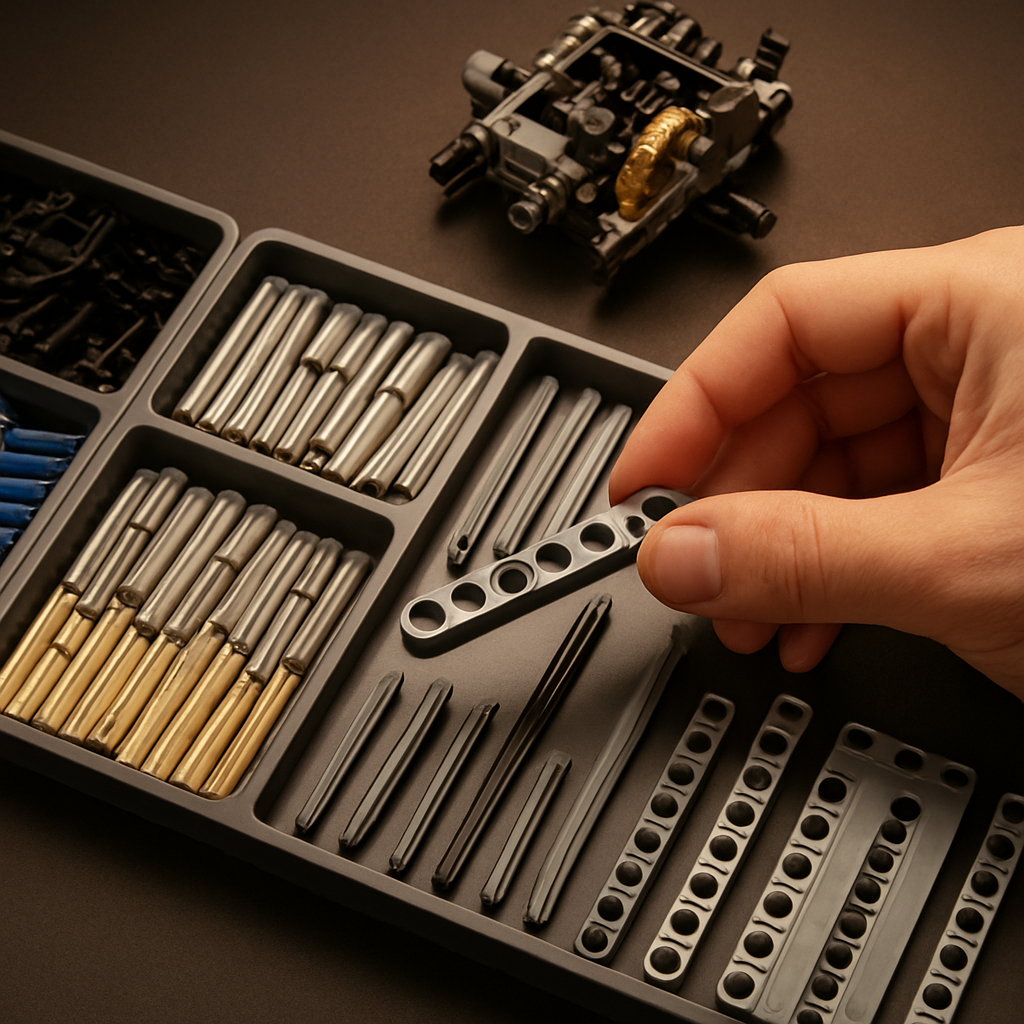
TL;DR
- —Technic compatibility is about function — parts must hold or move, not just fit.
- —Learn friction vs smooth pins, axle numbers, and beam lengths before sourcing.
- —Evaluate any brand (including BLDR) by geometry, friction behavior, and gear quality.
- —Keep the drivetrain single-brand; mix freely on the structural frame.
- —Spanish builders: use specific part terms for accurate piezas lego compatible searches.
Why Technic Parts Are a Different Compatibility Problem
Standard bricks stack. Technic parts move. That changes everything. A standard brick only needs clutch power. A Technic part needs to transfer force, rotate freely, or hold under load. A pin that's too loose strips out. An axle that's too tight binds the gear train. Function, not just fit, decides compatibility here.
Motion Transfer
Gears and axles must turn without slipping or jamming.
Load Tolerance
Beams and connectors bear weight in large builds.
Friction Control
Some pins grip; some spin. Mixing them up breaks mechanisms.
Tolerance Stacking
Small fit errors add up across a long axle or gear chain.
Most lego technic compatible parts copy the standard 4.8mm geometry and friction-pin design. But the tolerances run tighter than standard bricks. A part that “kind of fits” in a wall build can ruin a functioning gearbox. See our full ABS quality guide for the baseline standards.
Step 1: Learn the Technic Parts Language
You can't source what you can't name. Technic uses a specific vocabulary — learn it before shopping.
| Part Type | Key Variants | Function Rule |
|---|---|---|
| Friction Pins | Black, blue | Hold structure in place — do not rotate |
| Smooth Pins | Grey, tan | Rotate freely — pivot and axle points |
| Axles | Lengths 3, 5, 7, 9... | Transfer rotation — match length by number |
| Beams (Liftarms) | 3L to 15L | Structural skeleton — match hole count exactly |
| Gears | 8t, 16t, 24t, 40t | Transfer motion — ratio set by tooth count |
| Connectors | 90°, 180°, ball joint | Join beams at set angles — match function |
Step 2: How to Read a Parts List Before You Buy
Identify Function First
For each part, ask: does it hold or does it move? Sort your list into two groups before shopping. This single habit prevents most mechanical failures.
Match by Number, Not by Look
Two pins can look identical and behave differently. Two axles can look the same length but differ by one stud. Always match by the part's number designation.
Note the Critical Parts
Main drive axles, load-bearing beams, primary gears — source these from your most reliable brand. Save bulk sourcing for non-critical filler.
Count Spares
Friction pins wear out. Gears can strip. Always order 10–15% extra on high-use parts. Running out mid-build kills momentum.
Step 3: How to Evaluate the BLDR Brand
A common search among Technic builders: is bldr compatible with lego? Here's how to evaluate any Technic-focused alternative, BLDR included.
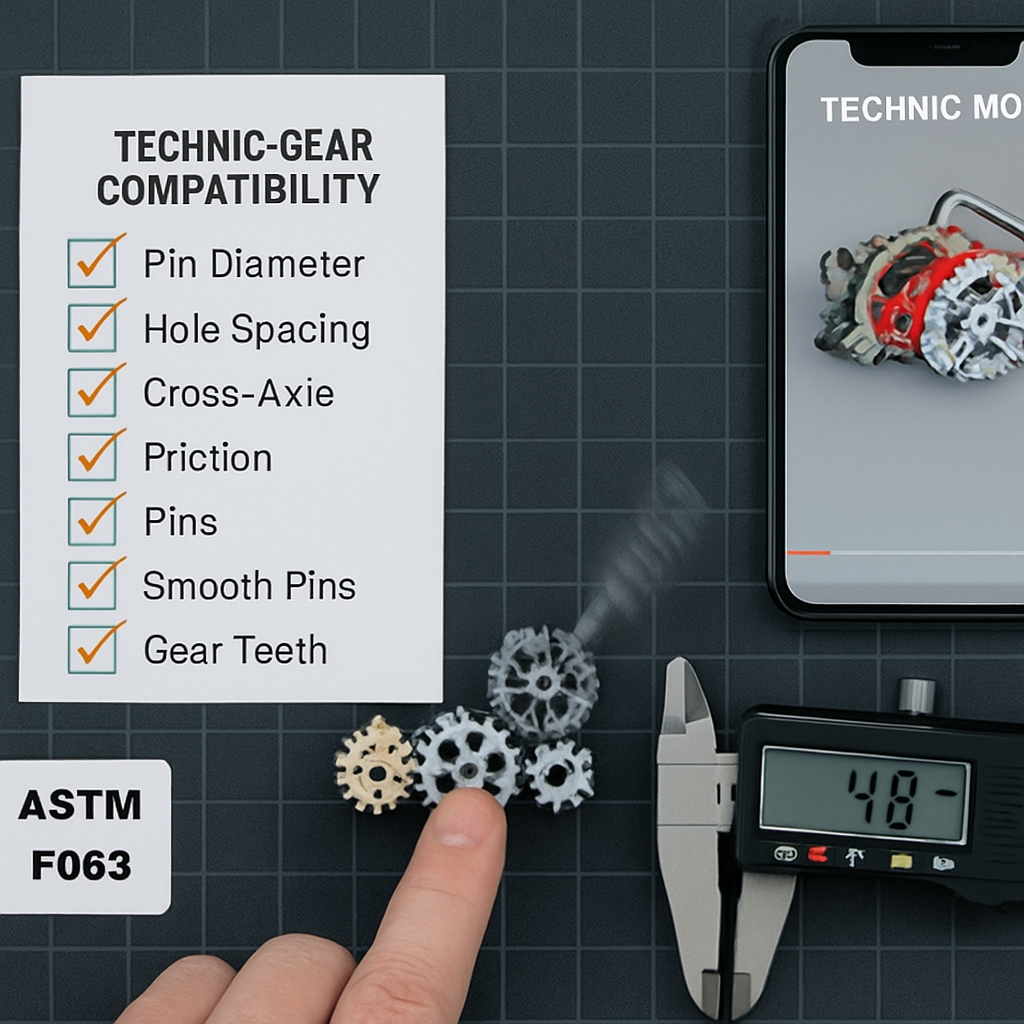
Check Core Geometry
4.8mm pin diameter, 8mm hole spacing, standard cross-axle profile. When 'is bldr compatible with lego' comes up, the answer hinges on these three numbers.
Test Friction Behavior
Snap a friction pin into a beam from another brand — it should hold firm but release with a deliberate push. Smooth pins should rotate freely without play.
Inspect the Gears
Look for clean, even teeth with no flashing, snug fit on the axle without wobble, and smooth meshing with gears from other brands.
Run a Motion Test
Build a small geared mechanism mixing the new brand with your existing parts. Crank it by hand. Listen for grinding. Smooth, quiet motion means the parts play well together.
Common mistake:Judging a Technic brand by its bricks alone. Always test the moving parts — pins, axles, and gears — because that's where compatibility breaks down.
Step 4: How to Source Lego Technic Compatible Parts
Build a Sorted Parts Inventory
One section for friction pins, one for smooth pins, one for axles sorted by length, one for beams sorted by hole count, one for gears and connectors. A sorted inventory turns any build into a fast, frustration-free process.
Source Critical Parts from Reliable Brands
For drive systems and load-bearing structures, buy quality. Cheap lego technic compatible parts fail under stress — pins strip, gears slip, beams flex. Premium ABS parts hold their tolerance build after build.
Buy Bulk for Non-Critical Parts
Filler beams, decorative connectors, and low-stress pins can come from budget sources. Save your money for the parts that matter most.
Keep a Replacement Plan
Friction pins are consumables. They wear with repeated use. Keep a steady supply so a worn pin never stalls your project.
Step 5: How to Build with Mixed Technic Parts
Use One Brand for the Drivetrain
Keep your drive system single-brand when possible. Gears, drive axles, and the motor connection need consistent tolerance to mesh cleanly.
Mix Freely on the Frame
The structural frame is more forgiving. Beams and connectors from different brands work fine together, as long as the hole spacing matches.
Test Each Subassembly
Technic builds break into modules — a gearbox, a steering rack, a suspension arm. Test each module's motion before connecting to the next.
Lubricate Sparingly
A tiny amount of plastic-safe dry silicone lubricant helps high-friction gear systems. Never use oil-based products — they degrade ABS.
Step 6: Shopping for “Piezas LEGO Compatible” — A Guide for Spanish-Speaking Builders
Many builders across Spain and Latin America search for piezas lego compatibleto find quality parts at better value. Language changes; standards don't.
| English Term | Spanish Term | Search Tip |
|---|---|---|
| Friction Pins | Pines de fricción | Add brand name for best results |
| Axles | Ejes | Add length number (e.g. eje 5) |
| Beams (Liftarms) | Vigas | Add hole count (e.g. viga 7L) |
| Gears | Engranajes | Add tooth count (e.g. engranaje 16t) |
| Connectors | Conectores | Add angle (e.g. conector 90°) |
Builders searching for piezas lego compatible can browse the Morebybourn collection, which ships across Europe and lists compatibility details for each set. See also: practical brand-mixing guide for more sourcing frameworks.
Common Technic Sourcing Mistakes to Avoid
Confusing pin types
Friction where you need smooth, or vice versa — ruins every mechanism.
Matching by sight
Always match parts by number, not appearance.
Skimping on the drivetrain
Cheap gears and axles fail under load. Spend here.
No spare pins
Friction pins wear out — always stock 10–15% extra.
Testing the full build at once
Test each module in isolation first.
Ignoring tolerance
A 'close enough' part jams precision mechanisms.
Key Takeaways
- ✓Learn the language: friction vs smooth pins, axle numbers, beam lengths.
- ✓Read function first: does the part hold or move? Sort before you source.
- ✓Test moving parts: geometry plus friction equals true Technic compatibility.
- ✓Source critical parts smart: quality for the drivetrain, bulk for filler.
- ✓Shop globally: the same standards apply whether you search in English or Spanish.
Shop Technic-Compatible Parts at Morebybourn
Morebybourn molds Technic-style parts to tight tolerance — pins hold, axles spin clean, gears mesh smooth. All parts are ASTM F963 and EN71 certified. Fast US and EU warehouse shipping, free returns, and a 2-year warranty.
Frequently Asked Questions
Is BLDR compatible with LEGO Technic sets?▼
To answer 'is bldr compatible with lego' — it depends on whether the parts match standard Technic geometry: 4.8mm pin holes, 8mm spacing, and the standard cross-axle profile. When a brand respects these measurements, its pins, beams, and axles interlock with LEGO Technic. The key is testing the moving parts. Snap-test friction pins, check that smooth pins rotate freely, and run a small geared mechanism to confirm clean motion before committing to a full build.
What should I look for in LEGO Technic compatible parts?▼
Quality lego technic compatible parts meet three checks. First, geometry: 4.8mm pins and 8mm hole spacing. Second, friction behavior: friction pins grip firmly while smooth pins spin freely. Third, gear quality: clean teeth, snug axle fit, and smooth meshing. Use premium ABS parts for drivetrains and load-bearing structures. Match every part by its number designation, not its appearance.
How do I find piezas LEGO compatible that actually fit?▼
Searching for piezas lego compatible works best with specific Spanish part terms: pines de fricción (friction pins), ejes (axles), vigas (beams), engranajes (gears), and conectores (connectors). The quality standards are identical in any language — confirm the 4.8mm geometry, test friction behavior, and inspect the gears. Choose brands that ship to your region and state their compatibility clearly.
Can I mix Technic parts from different brands in one build?▼
Yes, with a plan. Keep your drivetrain single-brand when possible — gears and drive axles need consistent tolerance to mesh cleanly. The structural frame is more forgiving, so beams and connectors from different brands work fine together as long as hole spacing matches. Test each module in isolation before connecting it to the next.
Why do my Technic pins keep coming loose or jamming?▼
It's usually a pin-type mismatch or worn parts. Friction pins should hold; smooth pins should spin. Using the wrong type causes loose connections or jammed pivots. Friction pins also wear out with repeated use, so stock 10–15% extra on high-use parts. If a quality pin jams, check for tolerance issues — a 'close enough' part can bind precision mechanisms.